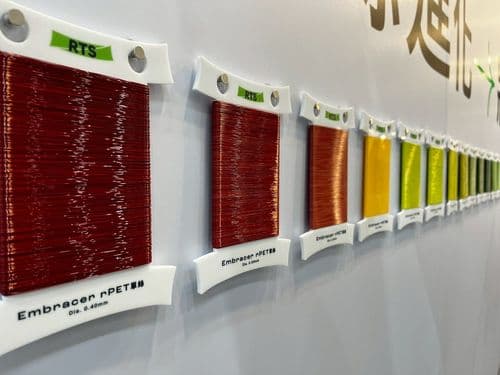
From Waste to Resource: Taming "Impure" Textile Waste for Mechanical Recycling
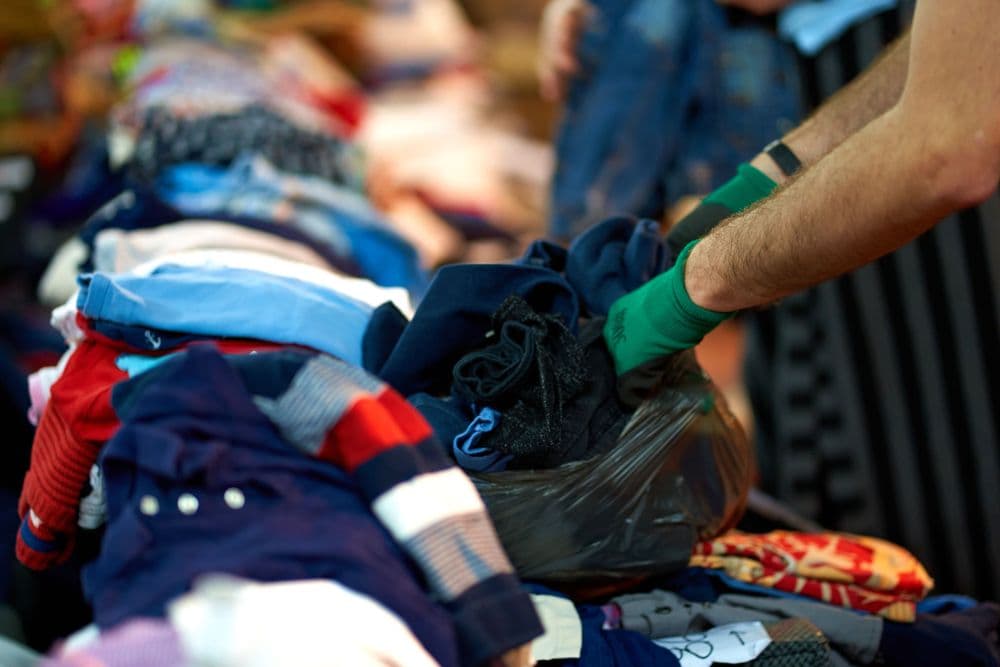
Facing the Reality of Complex Mixed Materials
There is a headache hiding behind the shiny concept of sustainability: textile waste is almost never pure. In the real world, we deal with a "cocktail" of complex, mixed materials.
Because RTS™ is committed to low resource consumption and reducing environmental impact, we use a non-decolorizing mechanical recycling method to process this waste. However, this makes handling mixed materials our biggest challenge. Waste yarns and fabrics are often a mix of cotton, nylon, or even Spandex (Lycra). These "impurities" all melt at different temperatures. In the early stages of R&D, this caused serious issues—the melted plastic wouldn't flow smoothly. This isn't just about melting plastic; it was a battle against contamination. We learned that strict screening at the source—ensuring single-material purity of over 95%—is the only way to turn trash into trustworthy raw material.
Overcoming the Feeding Barrier of Fluffy Fibers
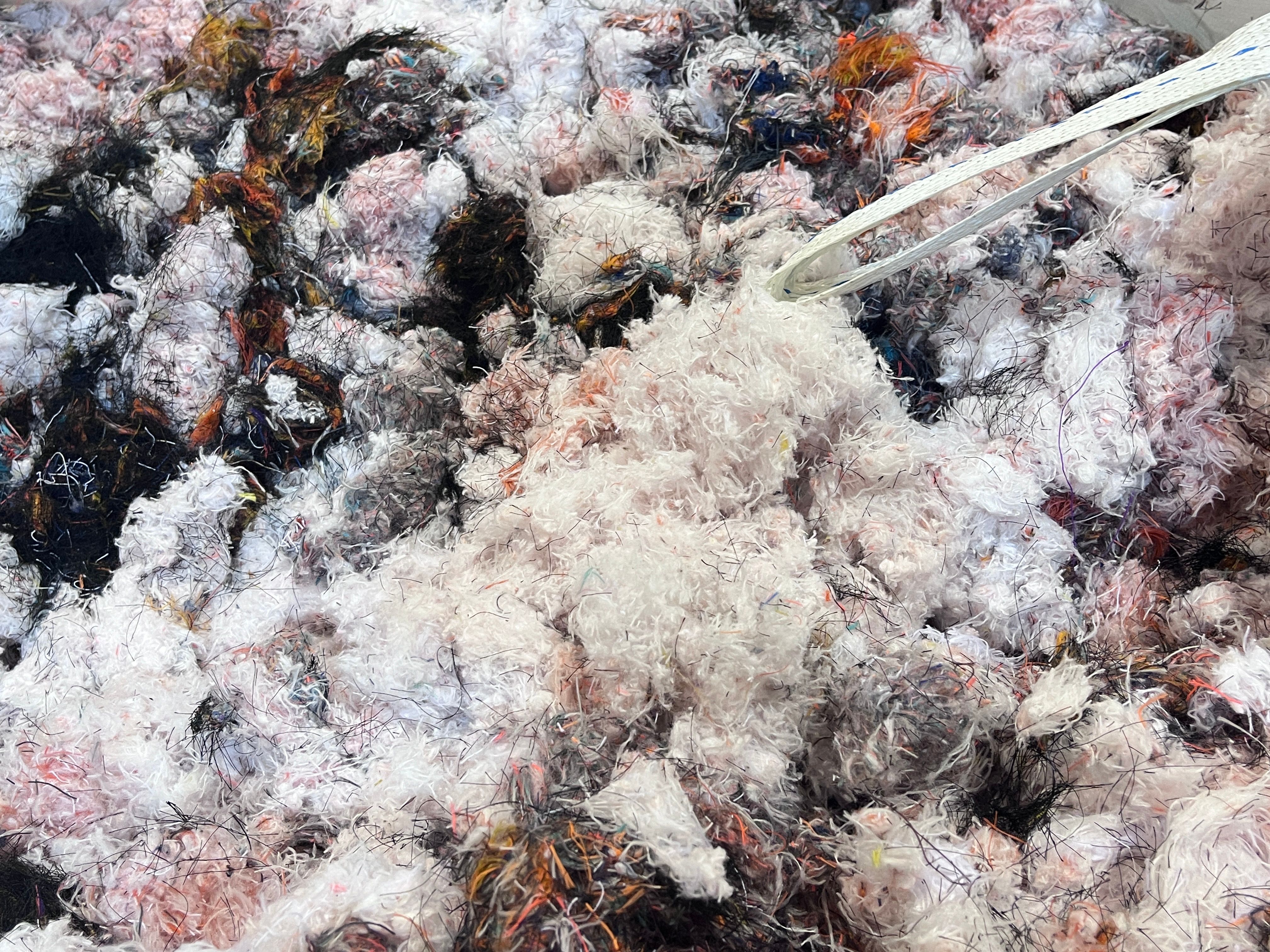
Beyond the chemical complexity, the sheer physical form of the waste is a nightmare. Once shredded, recycled textiles become extremely fluffy, light, and irregular.
Feeding this fluffy material into a standard extruder is like trying to push a cloud of cotton through the eye of a needle—the machine just can't "eat" it. To fix this, the RTS™ team introduced a continuous crushing and agglomeration process. This process solves the feeding problem, allowing those light, fluffy fibers and fabrics to be melted down smoothly and cut into solid pellets.
Technical Milestone: High-Quality Recycled Textile Pellets
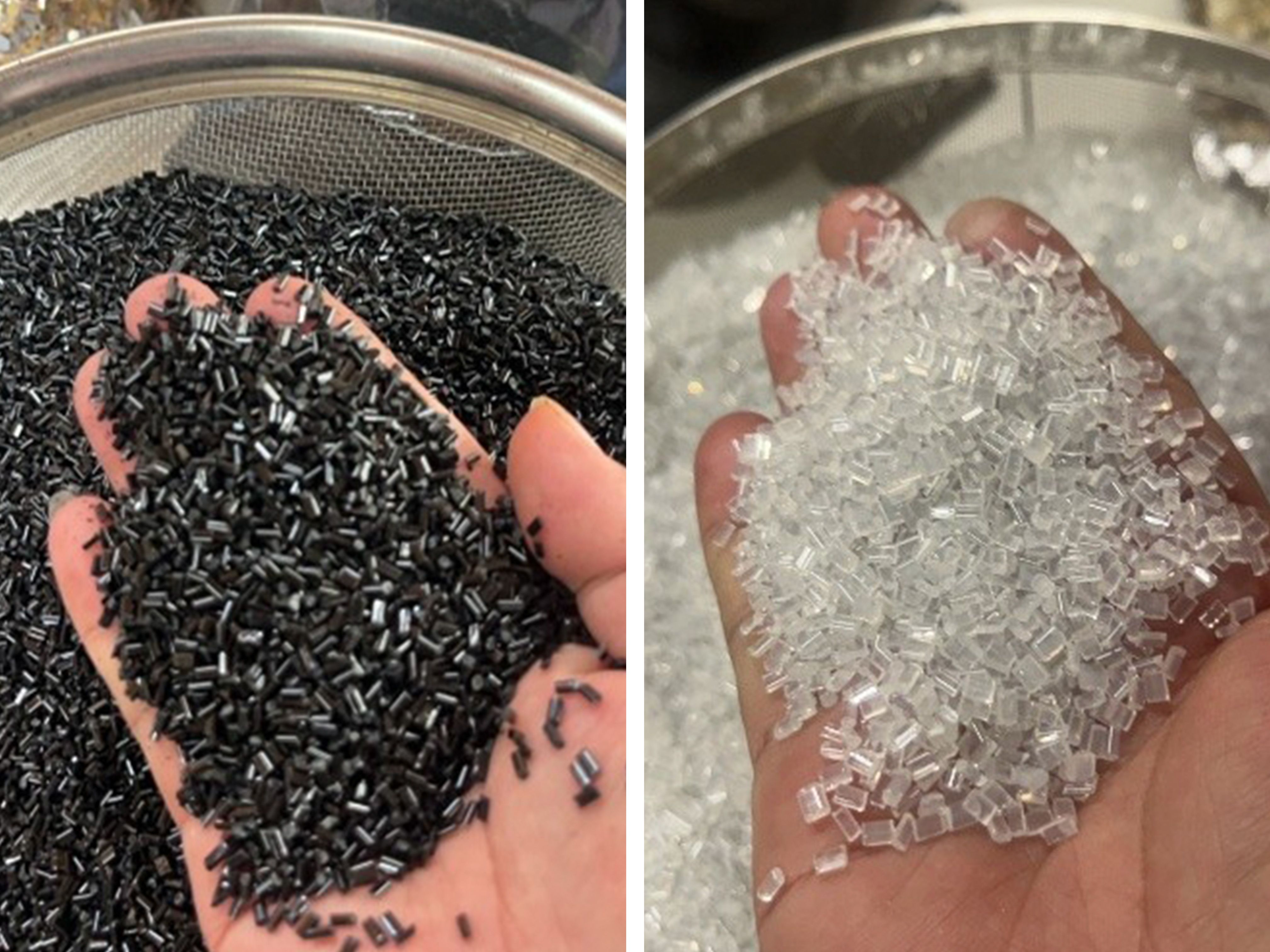
After a lot of adjustments to our parameters, we cracked the code for ester-based textile pelletizing. Laboratory data confirms that our recycled pellets now hit the target for both viscosity and moisture content.
This means we have successfully turned mixed, messy fabric waste into stable, high-quality industrial raw materials. This lays a solid foundation for a true "closed-loop" in the textile industry.
Retain to Sustain (RTSᵀᴹ) is an initiative launched by Ri-Thai with a mission to curb resource consumption and environmental impact while advancing the circular economy. Investing in R&D and adhering to the “Reduce, Reuse, and Recycle” principle has enabled us to advance innovative and low-carbon solutions that foster textile circularity and assist a wide range of industries in achieving their sustainability goals.
Join us in this mission for a greener world. Contact us at info@retain2sustain.com to learn more and be a part of this movement.
Keywords: Textile Recycling, Circular Economy, Mechanical Recycling, Pelletizing, Recycling Technology, Sustainability.