[Sustainability Spotlight] Beyond Monofilament: Shaping the Textile Ecosystem and Redefining OEM Boundaries
Tobey Chang, Manager of Business Development at Ri-Thai International, was recently invited as a keynote speaker by the [ESG Digital New Media Development Committee]. Delivering a talk titled "Sustainable Brand Transformation in Traditional Textiles: Driving Innovation from R&D to Finished Products," she shared her insights. By integrating R&D innovation, brand co-creation, circular material tech, and global case studies, this feature reveals how the traditional textile sector is redefining the value of "manufacturing"—evolving from mere product suppliers into critical strategic partners capable of co-creating sustainable impact alongside global brands.
The Catalyst: Shifting from a Cost-Driven Mindset to a Value-Creation Hub
For decades, traditional textile manufacturing has been purely reactive, treating sustainability as a checkbox exercise to satisfy client audit demands. Ri-Thai chose a different path. By joining an Co-innovation Lab with industry peers, we reframed sustainability from a compliance cost into a value driver. True sustainability isn't an expense—it is a viable, highly profitable business model built for long-term market competitiveness.
Global Outlook: Deciphering Europe’s Circular Framework and Brand Moats
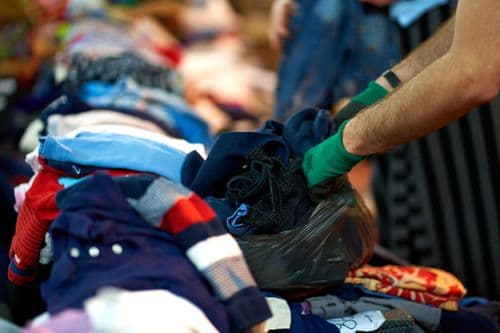
Europe, a global frontrunner in sustainability, has successfully commercialized circularity by merging rigorous regulation with business model innovation. Driven by frameworks like Extended Producer Responsibility (EPR) and Digital Product Passports (DPP), international brands are moving away from linear sales toward a closed-loop, material-as-a-service model. By leveraging traceable recycling data and high-efficiency sorting, they secure a predictable supply of quality recycled feedstock, building an unassailable green moat. This alignment of policy and commercial viability offers a blueprint for manufacturers looking to secure their place in high-end global supply chains.
Inside the Tech: The RTS™ Framework and the Philosophy of Symbiotic Design
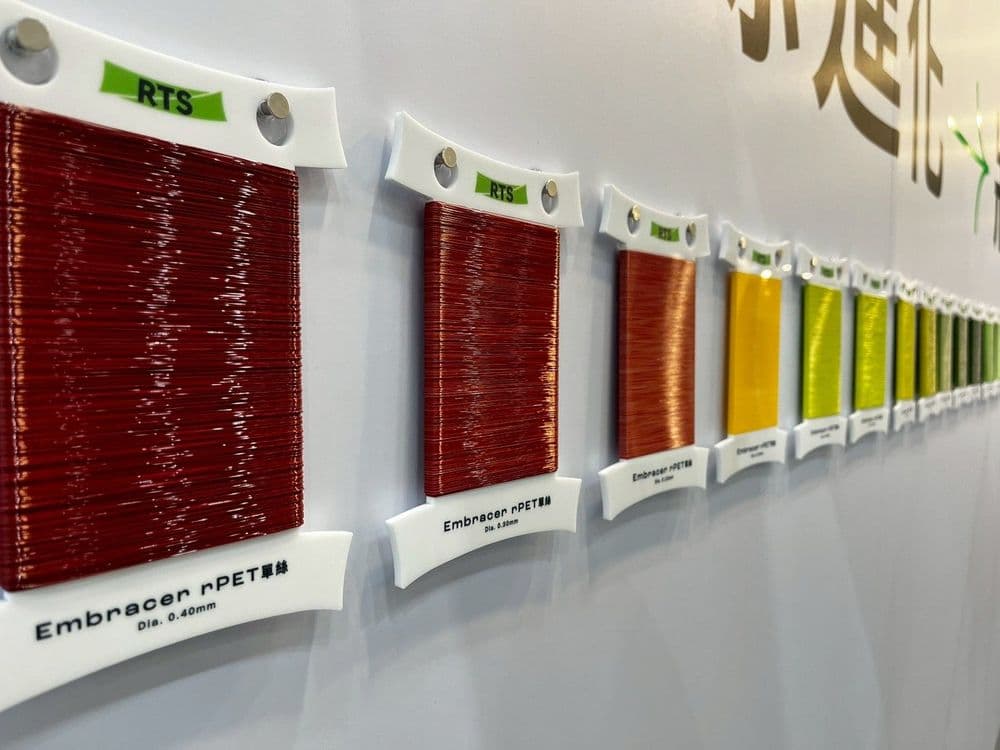
"A perfect cycle does not require perfect feedstock." This belief anchors Ri-Thai’s proprietary RTS™ (Retain to Sustain) brand. Rather than striving for impossible purity, our technology embraces the inherent imperfections of recycled materials. Utilizing our patented multi-component, "tri-component" extrusion technology, Embracer™, we seamlessly integrate lower-purity textile waste into high-performance monofilament without compromising tensile strength or aesthetic appeal.
In Practice: A Three-Year Trajectory Toward a Closed-Loop Ecosystem
Circularity at Ri-Thai is an operational reality, not a marketing slogan. Over the past three years, we have scaled our focus from engineering a single recycled composite thread to cultivating a full-fledged textile ecosystem. Partnering with the Department of Textiles and Clothing at Fu Jen Catholic University, we applied mono-material design principles to create the "Sustainable Woven Bag"—a prototype of end-consumer product engineered for total recyclability from the ground up.
High value is created by design. We invite brand visionary leaders and supply chain partners to collaborate with us across industries to co-author your next sustainable milestone.
RTS™ welcomes partners to close the loop on textile waste together. Contact us at info@retain2sustain.com
Keywords: circular economy, circular textile, circular textiles, textile-to-textile, business model